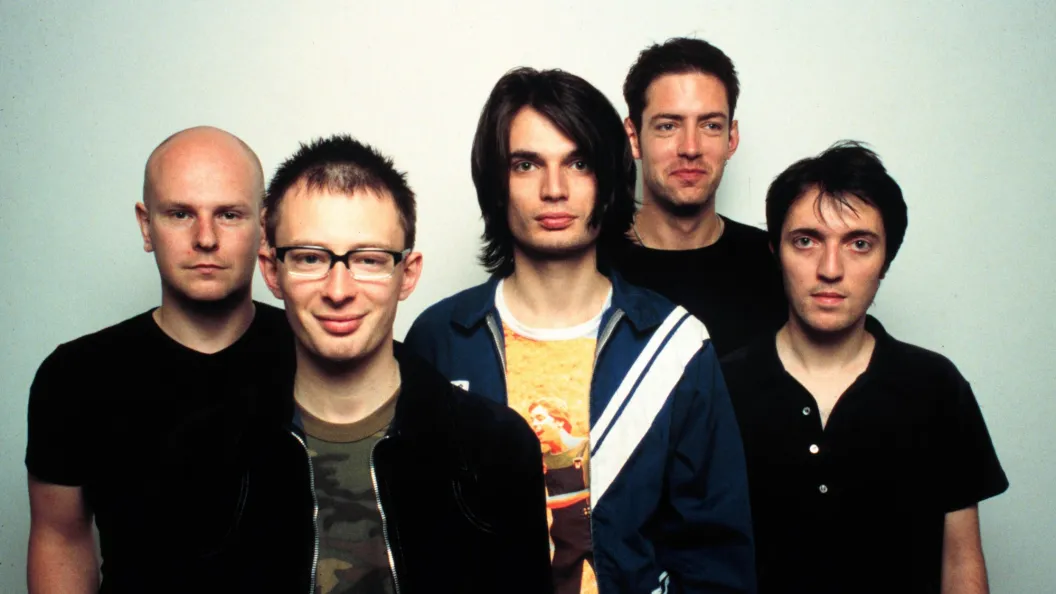
When Radiohead emerged from nowhere with the single “Creep” in 1993, they possessed all the hallmarks of a one-hit wonder. They also seemed to many like just another bunch of grunge wannabes.
Little did most fans realize at the time that the British quintet was about to embark upon a legendary four-album run. Or that they’d become one of the most celebrated bands of their era.
‘The Bends’
Radiohead’s 1993 debut album, Pablo Honey, found the band very much still finding its way, the success of “Creep” notwithstanding. The grunge movement that dominated that era hung heavy on their sound, and it wasn’t a good fit for them. On The Bends, they still delivered a powerful guitar attack that featured Jonny Greenwood. But they also balanced it out with a more melodic approach on songs like “High And Dry” and “Black Star”. Those moves helped to push Thom Yorke’s aching vocals to the forefront. The band also flashed their balladic skills on “Fake Plastic Trees” and “Fade Out (Street Spirit)”. This record represented a massive advance from a so-so debut to a masterpiece sophomore effort.
‘OK Computer’
The Bends wowed the folks who heard it. But Radiohead still pretty much dwelt in the alternative weeds when they convened in a British mansion to put together OK Computer. For the first time, they started to add computerized special effects to their high-drama rock, most notably on the robotic screed “Fitter Happier” and the skittish “Airbag”. The band also leaned into conceptual trappings, with most of the narrators desperately trying to withstand the terrifying advance of modern technology and the apathetic response of all around them. Peaks just keep arriving on this record. “Paranoid Android” is a shapeshifting marvel, “No Surprises” is melodic and icy, and “Let Down” might just be their greatest single song.
‘Kid A’
Anybody who’d listened to how much Radiohead had advanced in terms of their approach to that point really shouldn’t have been surprised by the turn they took with Kid A. Tiring quickly of a traditional rock approach, they scratched and clawed at their previous sound with iconoclastic glee. Call this album post-rock if you want. Good luck finding anything at all resembling the genre in this mix, save for perhaps the rattling “Optimistic”. More often than not, Thom Yorke drifts in from a distance in front of either cacophonous chaos (“Idioteque”) or ambient haze (“How To Disappear Completely”). A bold move that seemed polarizing at the time. Now, Kid A just seems like this standout band somehow topping themselves.
‘Amnesiac’
We’re guessing that this is the one album on this list of four that might give some folks pause. Was Amnesiac really the continuation of this incredible streak? Or was it too quirky and standoffish for its own good? We’re in the former camp, although we admit that it’s the kind of record that you have to live with for a while before its brilliance starts to envelop. The band recorded much of this album at the same time as Kid A, so the spirit of experimentation is still strong with it. Unsettling chord changes, sound effects, and sentiments abound. Yet when you meet these songs at their level, you’ll be captivated by the strange beauty of oddities such as “Like Spinning Plates” and “Life In A Glasshouse”.
(Photo by Jim Steinfeldt/Michael Ochs Archives/Getty Images)
The post Incredible Four-Album Streaks: Radiohead From 1995 to 2001 appeared first on American Songwriter.