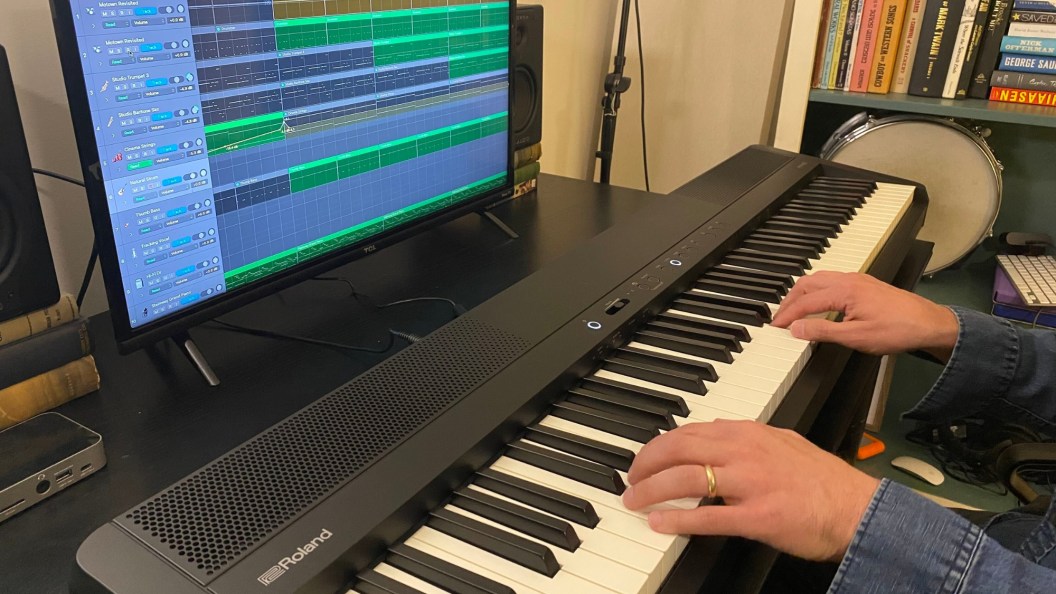
As a songwriter, I spend a lot of time sitting in front of a keyboard. Most of the time, it’s a smaller one. They’re convenient, easy to travel with, and don’t take up much space in the studio. And for overdubbing and producing songs, they’re often all I need.
But there’s just something about sitting down at a full-size piano that I miss. The weight of the keys, the way the instrument responds to your touch, the sound filling the room. It is a different experience, and I believe it changes the way you play.
That’s what I was reminded of when I started playing the Roland FP-40 digital piano.
The Roland FP-40 Emulates the Classic Full-Size Piano Experience
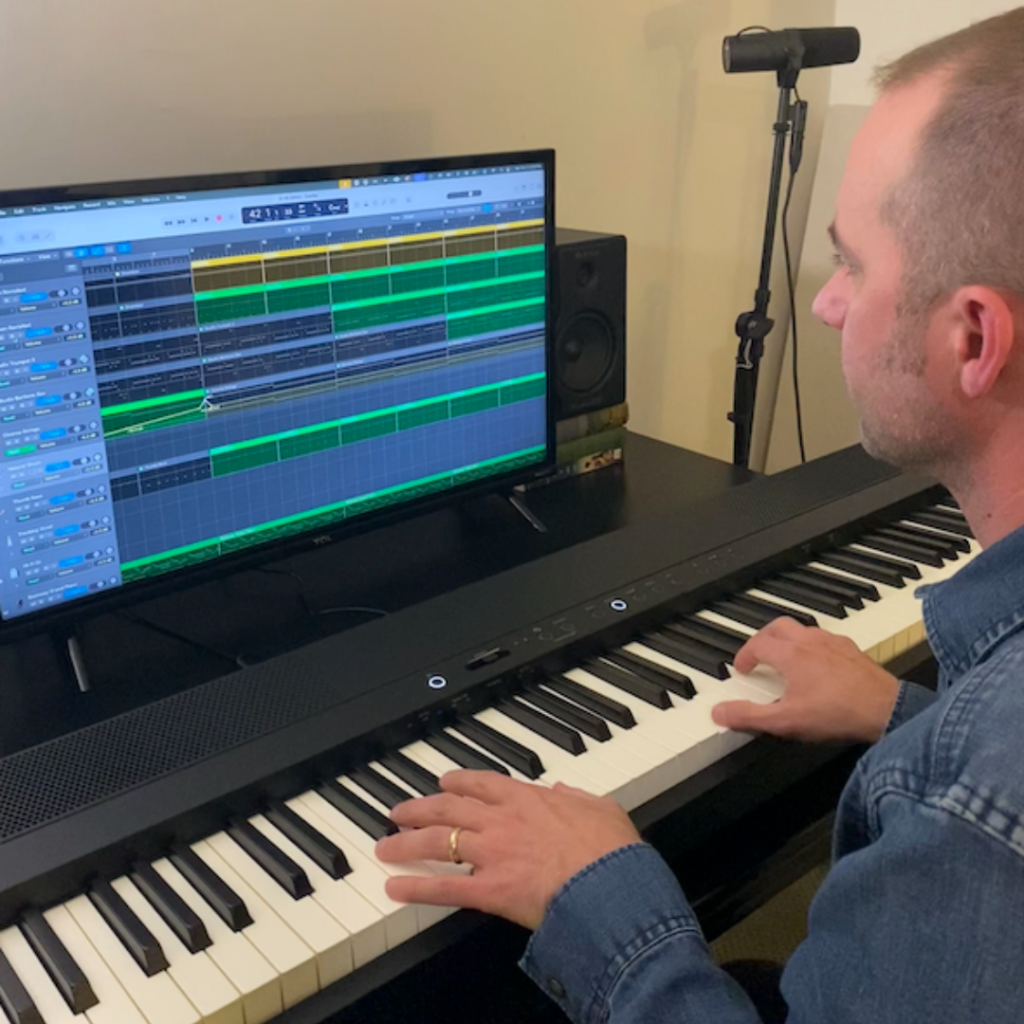
The FP-40 gets many things right. I loved the weight and feel of the keys and was really impressed with the piano sounds, especially with how it responded to the dynamics of my playing.
The FP-40 is Roland’s newest addition to its FP series of portable digital pianos, replacing the FP-30X. I’ve never played the FP-30X, but I like where they landed here. It has 88 weighted keys, a new Piano Reality sound engine, redesigned speakers, and Bluetooth and USB-C connectivity.
It also works with Piano Sphere, Roland’s new learning app developed with Skoove, which I’ll get into later.
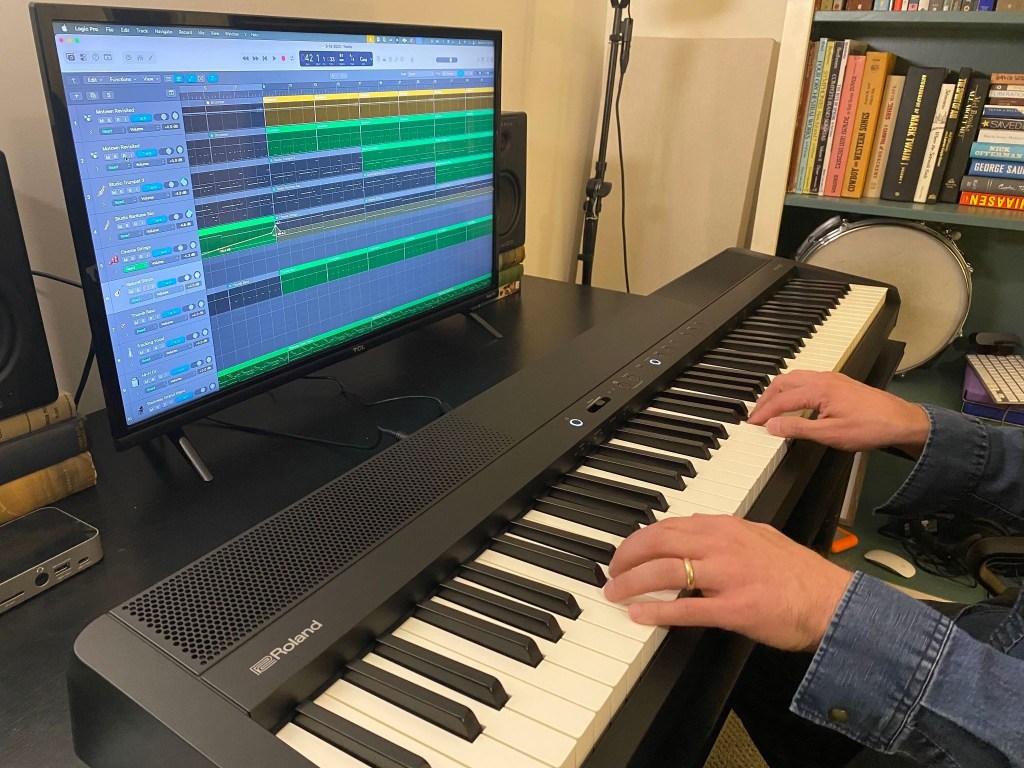
With portable keyboards, dimensions matter. So, here’s what we’re working with here: The FP-40 is about 51 inches wide, 13 inches deep, and weighs just under 31 pounds. So it’s not something you would throw over your shoulder, but it’s portable enough to move around the house or take to a gig. And it fits perfectly on my studio desk.
It comes in black or white and works with a regular keyboard stand. Roland also makes a dedicated stand and three-pedal setup if you want something that looks more like a traditional piano. You get a music rest, power supply, USB-C cable, and basic sustain pedal in the box.
I like that Roland has kept the overall design pretty simple. It looks like a piano, and for the most part, it feels like one.
Quality Keys
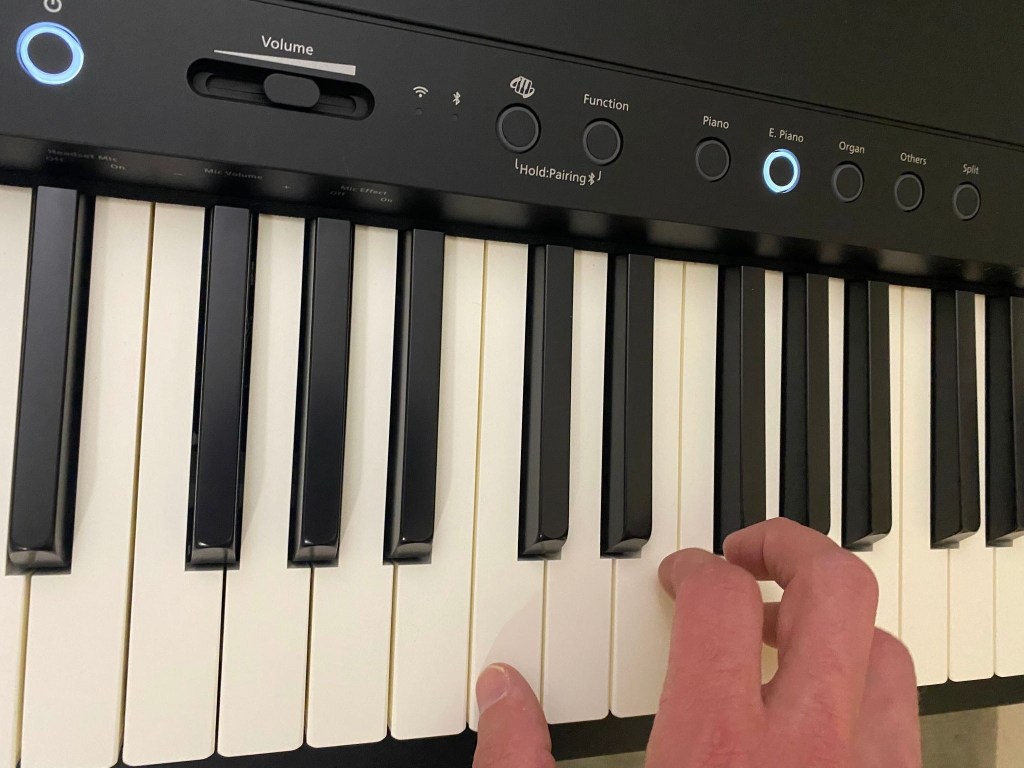
Roland uses its PHA-4 keyboard, which has full-weight keys with an ivory-like texture. Which, for anyone who grew up playing an acoustic piano, is the feel you’re looking for when you put your fingers on the keys. It’s designed to feel more like an acoustic piano than a keyboard, and I think they’ve done a really good job with it.
When it comes to the weight and texture of the keys, there’s enough resistance that you feel like you’re actually playing a piano, but the action still feels responsive.
The way it responds to the dynamics of my playing is also noteworthy. I could play something softly and get a really delicate sound, then dig into the keys and hear the piano respond. It felt like I had a lot of control over what I was playing, which isn’t always the case with digital keyboards.
The FP-40 uses Roland’s new Piano Reality sound engine, which combines sampled piano sounds with modeling technology. The acoustic piano sounds were particularly convincing. There’s a richness to them, and more importantly, they respond naturally to the way you play.
There are several acoustic piano sounds to choose from, along with electric pianos, organs, strings, and other options. I spent most of my time with the acoustic pianos, and I think that’s where this instrument shines.
Built-In Speakers and Overall Design
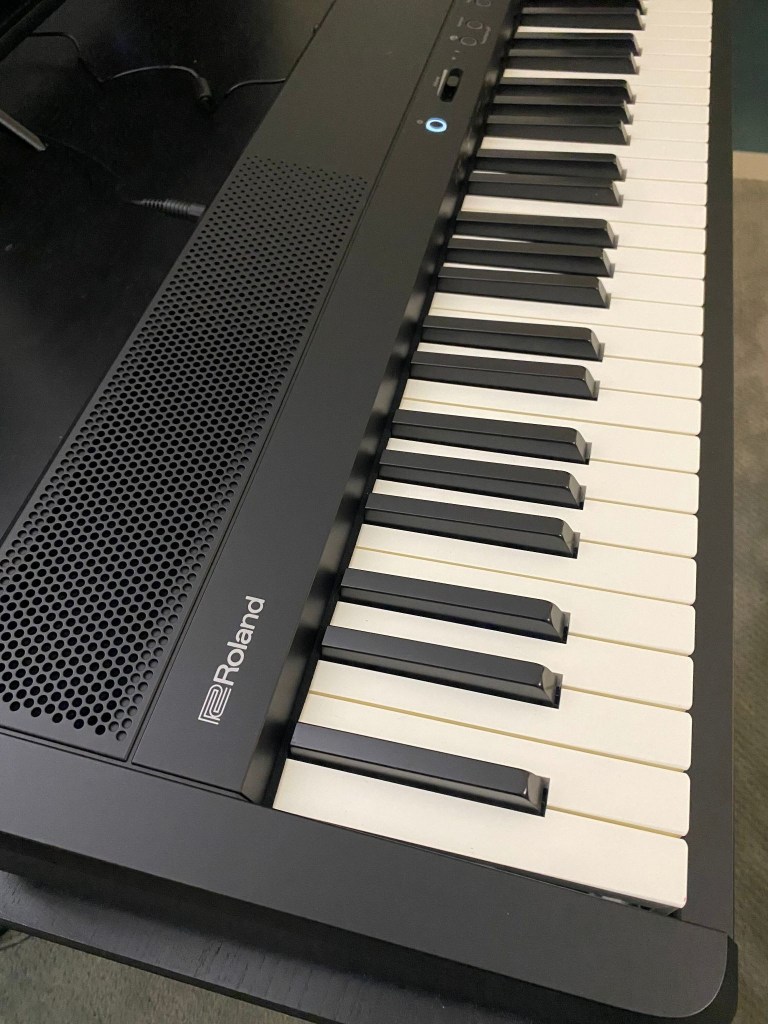
Roland has also redesigned the built-in speakers so more of the sound is directed toward the player. You can sit down, turn on the piano, and play without having to connect it to anything else. You can also use headphones or connect external speakers, of course. But for playing at home, I thought the built-in speakers were more than capable.
The FP-40 has a clean design, too. There aren’t a ton of buttons or knobs on the top panel, which I like. It looks more like a piano than a typical keyboard.
Connections and MIDI
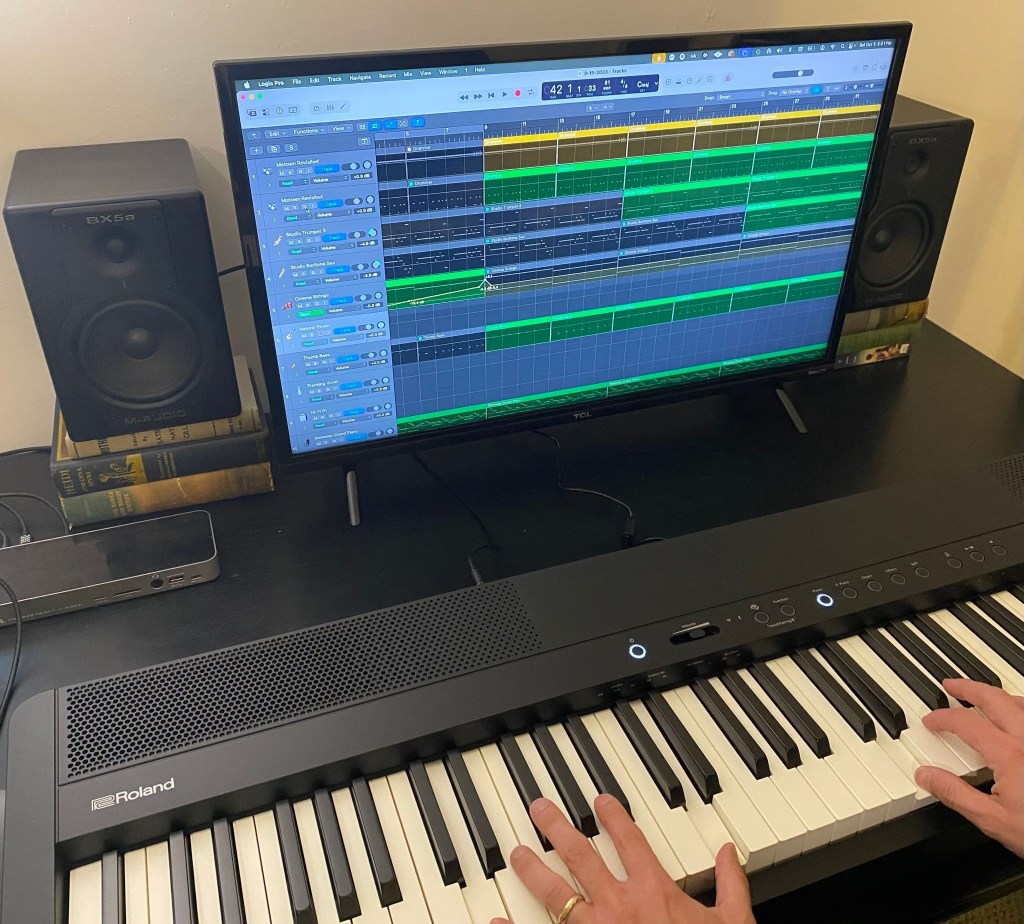
As far as connections go, there’s quite a bit here. You’ve got Bluetooth audio and MIDI, USB-C for connecting to a computer or mobile device, and connections for external speakers and pedals.
The USB-C connection can handle both MIDI and audio, which is particularly useful if you’re recording. You can use the FP-40 as a piano on its own, or connect it to your recording setup.
Piano Sphere
One feature I was particularly interested in was Piano Sphere, Roland’s new piano learning app developed by Skoove. I’ve watched a few demonstrations of it, and as someone who spent a decade teaching private music lessons, I think there’s a lot of potential here.
I still believe that there’s nothing quite like working one-on-one with a good teacher. They can hear what you’re doing, recognize where you’re struggling, and help you figure out what to work on next.
But not everyone has the time or money for private lessons. And while there are thousands of piano lessons on YouTube, I think it’s pretty easy to get overwhelmed with all of that information. That’s where Piano Sphere could be useful.
Instead of just giving you a bunch of lessons to choose from, the app asks about your playing ability, the music you like, and how much time you have to practice. From there, it helps you put together a plan for improving.
Piano Sphere offers lessons, suggests what to work on, and tracks your progress. There’s also a library of songs to learn, with more than 1,000 available through an optional paid upgrade. And because the app is designed to work with the FP-40, you can control some of its functions directly from the piano, rather than constantly having to reach for your phone or tablet.
I don’t think an app is ever going to replace a good teacher. But there’s a big gap between watching random videos online and taking regular private lessons. And from what I’ve seen, Piano Sphere looks like an interesting way to fill it.
Closing Thoughts
I really enjoyed playing the Roland FP-40. I loved the weight and feel of the keys; the acoustic piano sounds were particularly convincing, and I was impressed with how naturally it responded to my playing.
I do wish switching between sounds was a little easier, but I understand the tradeoff Roland is making with the simpler design.
It’s an excellent option for someone who wants the experience of playing an acoustic piano without having to make room for one. And if you’re someone who’s getting back into playing after some time away, the combination of the piano itself and Piano Sphere could make a lot of sense.
But the thing I keep coming back to is how much I wanted to play it. Between writing, recording, producing, and composing, it’s easy to forget how much fun it is to just sit down and play an instrument. That’s what FP-40 reminded me of. And for me, that’s probably the best thing I can say about it.
All Photos taken by Dean Fields/American Songwriter
When you purchase through links on our site, we may earn an affiliate commission.
The post The Roland FP-40 Brings the Joy of Playing Piano Back to the Studio appeared first on American Songwriter.