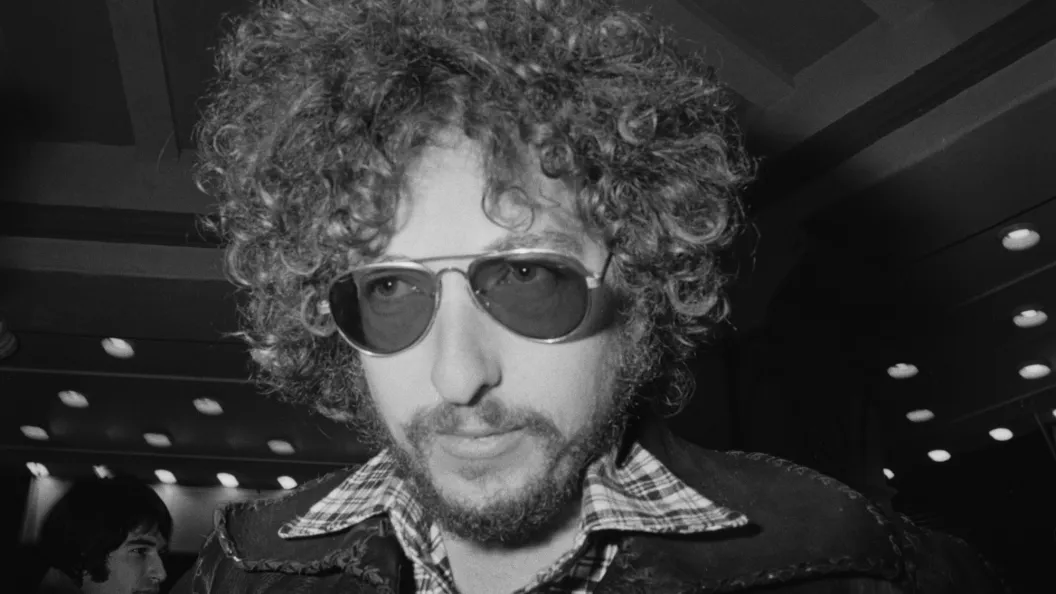
Most of the artists we profile in these articles about incredible streaks of four albums in a row are fortunate to have one stretch in their career considered. Bob Dylan stands as someone who could make multiple claims for inclusion in this category.
This time around, we’re focusing on his work in the 70s. From 1975 to 1979, Dylan went on a roll that few other artists could hope to match.
‘Blood On The Tracks’
Many people point to the issues Dylan was having in his marriage as the catalyst for Blood On The Tracks. And that’s partly true. Songs like “Idiot Wind” and “If You See Her, Say Hello” seethe and ache majestically. But you also must give credit to the painting lessons that Dylan started taking around the time he made the record. Suddenly, his songs contained the past and present, truth and fiction, tender hope and unfathomable pain in their profound tableaus. These new stimuli seemed to jolt Dylan out of the artistic timidity that had enveloped him since his motorcycle accident in 1966. That jolt would propel him into the dynamic stretch that he sustained for the next several years.
‘Desire’
Dylan hadn’t intended to rush back into the studio so soon after Blood On The Tracks won him such acclaim. But when he happened upon Jacques Levy, an old acquaintance with a theatre background, the two suddenly embarked on a songwriting partnership. Levy seemed to bring out the storyteller in Bob. Desire is replete with long narrative songs, some biographical (“Joey”, “Hurricane”), some fantastical flights of fancy (“Romance In Durango”, “Black Diamond Bay”). The album also stands out for its exotic sound, embellished by the presence of Scarlett Rivera on violin and Emmylou Harris on backing vocals.
‘Street-Legal’
If you’ve never listened to Street-Legal, do not believe the negative critical notices that sometimes get attached to it. When it was released, some folks complained about a muddy mix. If that were a problem, it’s long since been rectified by various reissues. The album doesn’t really have a marketing hook to it like the others within this four-album streak. It bounces wildly all over the place, from straightforward love songs like “True Love Tends To Forget” to portent-drenched sagas like “Changing Of The Guard”. But Dylan sounds fiery and engaged throughout. And he drops a couple of stone-cold classics along the way in “Senor (Tales Of Yankee Power)” and “Where Are You Tonight? (Journey Through Dark Heat)”.
‘Slow Train Coming’
Despite his professional resurgence in the mid-70s, Dylan’s personal life took a bit of a nosedive at around the same time. Christianity offered him a new direction. And it gave his music purpose. Contrary to his habit of being carefree and haphazard with his recording sessions, he ensured Slow Train Coming would come off sounding crisp and soulful thanks to his wise choice of collaborators. They included legendary producer Jerry Wexler, Muscle Shoals studio stars, and Dire Straits guitarists Mark Knopfler. With those guys behind him, Dylan comes off as utterly convincing, whether he’s a furious scold (“Slow Train”) or a tender supplicant (“I Believe In You”).
(Photo by Tony Korody/Sygma/Sygma via Getty Images)
The post Fantastic Four-Album Runs: Bob Dylan From 1975 to 1979 appeared first on American Songwriter.