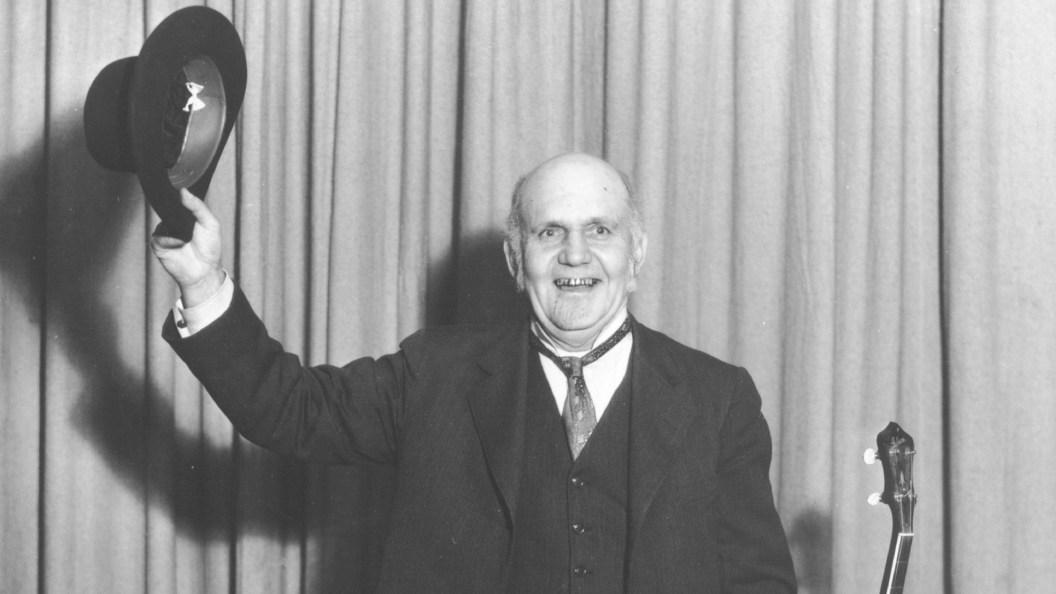
On this day (November 4) in 1930, Henry H. Horton was elected to his third term as the Governor of Tennessee. Not long after he won his re-election, banks owned by his political allies began to collapse. Horton had deposited most of the state’s money into those banks. As a result, the state of Tennessee lost more than $6 million, which is more than $123 million in today’s currency. The resulting financial disaster inspired Uncle Dave Macon to write “The Wreck of the Tennessee Gravy Train.” \
Horton served as the Speaker of the Senate from 1926 to 1927. Then, sitting governor Austin Peay died in October 1927, and the law of succession placed Horton in the governor’s mansion. A year later, he had to run for re-election. Ahead of the race, he turned to Peay’s advisor Luke Lea, who owned the Nashville Tennessean and was a successful investor in banks, real estate, and other ventures, according to the Tennessee Encyclopedia.
Henry Horton’s Corrupt Actions Cost Millions
After winning his second term in 1928, Horton and Lea began using political patronage to fill jobs in the state government. At the same time, Lea was closely linked with Rogers Caldwell, a Nashville financier who owned banks, newspapers, and manufacturing operations. Notably, he owned Kyrock, which produced road building materials. At the time, Horton was overseeing the construction of a sprawling state highway system. Horton allowed the highway department, controlled by a political ally, to award Kyrock contracts without competitive bidding from other companies.
That was just the tip of the corruption iceberg, though. Horton placed millions of dollars of state funds into Caldwell’s banks. This boosted Caldwell’s financial profile. Then, the stock market crashed in 1929, kicking off the Great Depression. Days after Horton won his re-election in November 1930, Caldwell and Company collapsed, taking out several banks across the Southern United States. More than $6 million in state funds vanished as the insolvent banks collapsed.
Uncle Dave Macon Responds
Uncle Dave Macon, already a Grand Ole Opry star in 1930, wrote a biting satirical song about Henry Horton’s corruption and the financial disaster that followed. In December 1930, he and Sam McGee recorded “The Wreck of the Tennessee Gravy Train.”
The song’s final verse gets to the root of its inspiration: Some lay it all on parties, some lay it on others, you see. / But now that you can plainly see what happened to Tennessee. / Well, the engineer pulled the throttle, the conductor rang the bell / The brakeman hollered, “All aboard!” and the banks went all to hell.
Macon released the single in January 1931. According to Secondhand Songs, it has since been recorded by several folk acts, including The New Lost City Ramblers, Rick & Lorraine Lee, Mike Seeger, The Gypsy Gyppo String Band, and, most recently, Art Thieme.
Featured Image by Michael Ochs Archives/Getty Images
The post On This Day in 1930, a Tennessee Governor’s Re-Election Triggered a Banking Panic and Inspired a Country Music Classic appeared first on American Songwriter.